Why Memorizing Words and Grammar Rules Stops Working After School

Translated from the original Chinese and reviewed by the author. Read the original (Chinese)
Memorize word lists → study grammar rules → do practice drills → memorize more grammar.
That is how almost all of us were taught English in school. The trouble is, long after graduating, millions of people still rely on that exact same playbook. And after all that effort, they still freeze up in front of a long page of English, struggling to read, listen, or speak comfortably.
I was stuck in that loop for years myself. More than a decade after leaving school, the first few times I tried to pick English back up, my immediate instinct was still to buy a thick grammar book and download flashcard apps to grind through word lists. Every time, I drilled until my head hurt, yet the moment I opened a real technical doc or an English novel, I still could not get through it.
It was only after I discovered Comprehensible Input and spent a few years actually reading English that I understood why the old school playbook kept failing me.
The School Method Was Designed for Scoring Points on Exams
Let us be honest about why schools teach English that way: the goal is passing tests.
Exams test you on subtle word distinctions, multiple-choice grammar questions, and error-spotting drills. If your goal is scoring high on an exam next month, memorizing word lists, reciting grammar rules, and grinding through practice tests is the most direct path. Nothing wrong with that for test prep.
Once we leave school, though, we are not learning English to pick between options A, B, C, and D anymore. We want to read articles and follow conversations in real life and at work. Those two goals rely on completely different skills.
When you are solving a grammar question on a test, you have plenty of time to pull up a grammar formula in your head and compare four choices. When you are reading an article or listening to a podcast, though, if you have to pause at every sentence to label the subject, verb, object, and clause type, recall a grammar rule, and translate the pieces word by word into your native language, your brain simply cannot keep up. Half a page in, you are mentally wiped out.
Knowing Grammar Rules Is Not the Same as Understanding Real English
Exam-focused classes also leave us with a stubborn assumption: "I have to master all the grammar rules and memorize enough word lists before I am ready to read real English."
In reality, it works the other way around.
Think about native speakers, or think about how you use your own first language. If someone asked you to define two verb tenses the way a grammar textbook does, most of us would struggle to explain them, yet we read and talk effortlessly every day. On the flip side, plenty of learners can recite subordinate clause rules backward and forward, only to go blank when they hit a long sentence in a real article.
A genuine feel for a language is not assembled out of grammar formulas. It grows out of listening a lot and reading a lot, until the patterns become second nature from sheer exposure. A grammar book is fine as a reference when a particular sentence really stumps you, but treating it as the front door to learning English gets the order backward.
How I Shifted My Own Approach
Breaking out of that loop meant unlearning a couple of old reading habits:
I used to read with side-by-side bilingual apps, where my eyes constantly drifted over to the native translation, keeping my brain locked in "translate English into my first language" mode. And whenever I hit a slightly longer sentence, I automatically tried to dissect its grammar parts.
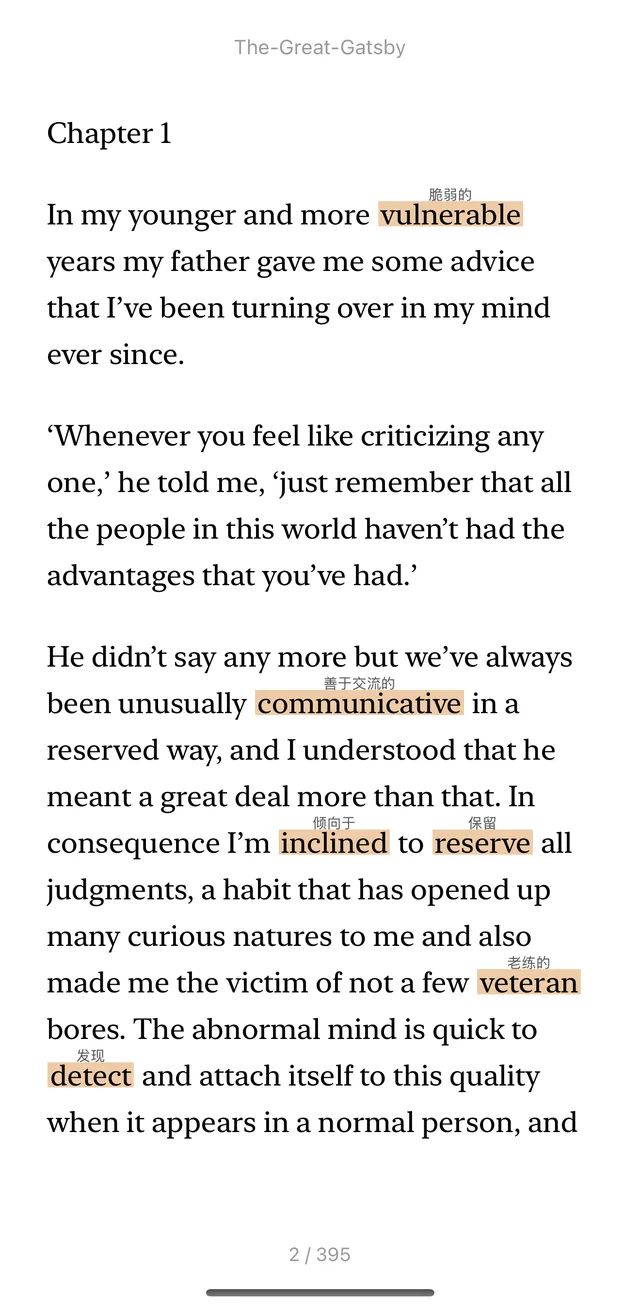
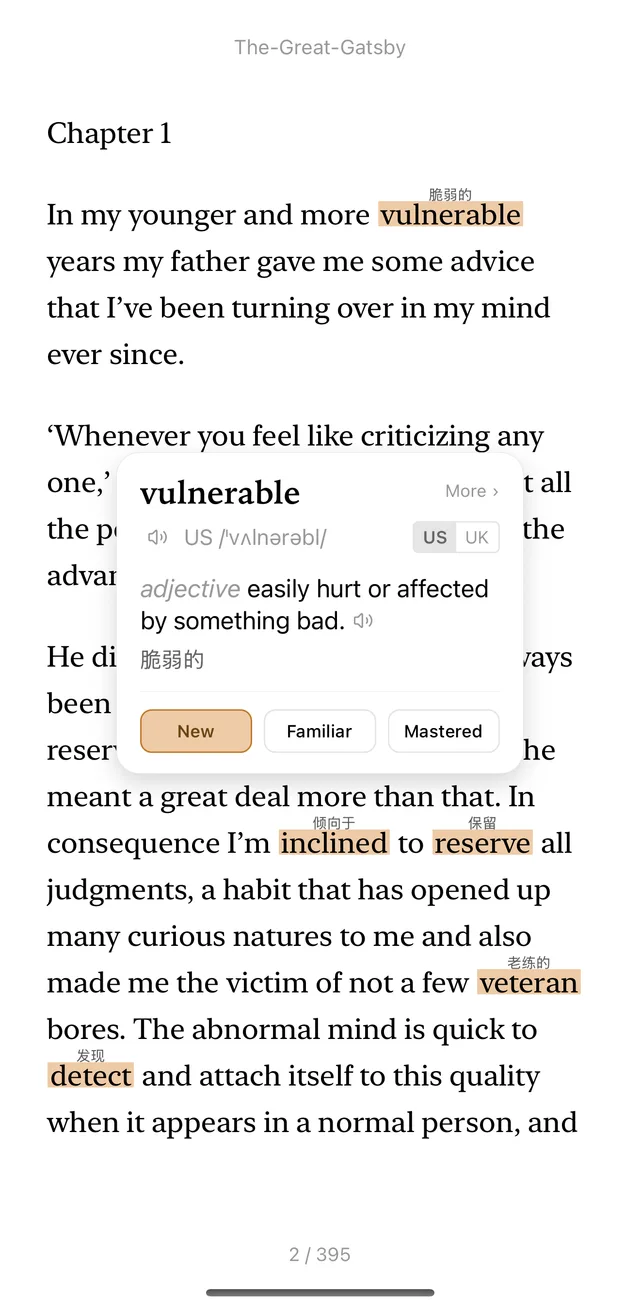
Later, while using LingQ and the Cambridge Dictionary website, I started practicing reading simple English definitions and understanding words directly inside their context. It felt a bit unfamiliar at first, but before long I noticed something: when I stopped trying to label grammar terms or translate word by word, and just followed the context to see what the sentence was saying, reading became much smoother.
When I started building SentiaRead last year, I wanted to make that shift as effortless as possible:
- When I run into an unfamiliar word, one tap lets AI read the current sentence and explain the exact meaning in simple English at my level, with a native-language gloss available if I still need to double-check.
- When I hit a long, winding sentence where I know all the individual words but lose track of the structure, I do not go digging through a grammar book to see what kind of clause it is. I just tap to have AI rewrite the sentence in simpler English. Once I grasp the idea, I look back at the original sentence to see how it was put together. After seeing enough of them in context, those structures start feeling natural on their own.
If grinding through word lists and grammar books feels miserable right now, you really do not need to force yourself to keep doing it. Set the grammar book aside, pick up something you actually care about, and meet English inside real sentences. It is lighter, more enjoyable, and works much better. If you want to read more about how I build vocabulary through everyday reading, check out The Most Effective Way to Grow Your English Vocabulary.